NEW - download 'Seoul VillageS (서울 마을들)', my collection of 12 short fictions now adapted into short films! Get your free copy of the ebook (4 editions: English, French, Korean, Bilingual English-Korean)!

Showing posts with label Hongjecheon. Show all posts

Friday, April 29, 2022

Seoul's Waterfront Renaissance

Seoul has always been defined by its most valuable environmental assets: its countless waterways, and the mountains that feed them. 

From the start, the capital revolved around Cheonggyecheon and its network of streamlets:
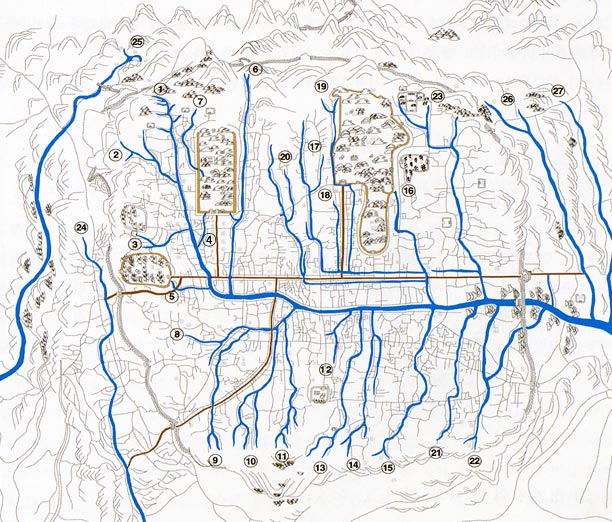
Nowadays, the Han River tells what's North and what's South, but waterways still account for 8.1% of Seoul's land (below in 2010):

After pouring concrete all over the place to tame the powerful Hangang and its tributaries, to stabilize unstable riverbanks, and to prevent recurring floods, the city has reopened its heart to its waterways, rediscovered them as leisure paths and environmental treasures. Following the restoration of Cheonggyecheon, the Hangang Renaissance, and the restoration of neighborhood streamlets, masses of humans, birds, and even fishes have flocked back to Seoul's watersides. Yes, more concrete was often poured in the process, but biomass keeps growing, embankments are often doubled with natural fish nurseries, and significant wetlands have been created.


Citizens are already very active along these waterways, thanks to all the infrastructure needed by strollers, cyclists, or workout maniacs:

But water level and street level are seldom seamlessly connected, and for good reasons: flash floods remain a constant threat, and these waterways help the city cope with extreme downpour. On such occasions, riversides must be evacuated immediately. Still, more citizens could spend more leisure time there, particularly when they crave for more free and cool open spaces.

More than a decade after his Hangang Renaissance project, Mayor OH Se-hoon aims at a 'Jicheon Renaissance' leveraging Seoul's 332 km of waterways. Not just with more hardware, but with more content and culture, a better connection to local neighborhoods and markets, More 'emotion', as part of an 'Emotional City' of the future vision.

Starting with 4 pilot projects along three streamlets (Dorimcheon, Jeongneungcheon, and Hongjecheon), with 2 more sites by 2030 (Anyangcheon and Jungnangcheon):

  • Hongjecheon will never fulfill its great potential as long as the Naebu Expressway disgraces it (see "Along Hongjecheon, my way or the highway"), and the pilot will focus on two spots: upstream at Hongjimun and Tangchundaeseong, midway at the artificial waterfall near Seodaemun District Office, with a place to have a drink.


  • Dorimcheon is more about the connection to the neighborhood and its businesses, with decks to make the transition and chill out:


  •  Jeongneungcheon will add a cultural layer through a new media art space:


Of course, all this requires water, particularly since the city intends to make these shallow streamlets a bit deeper (from a very thin 10 cm to a more significant 30 cm). So backstage, there's a lot of work to improve water and waste management. 

Today, 18 streamlets including Cheonggyecheon are actually fed with water recycled from the Han River, and climate change has spectacularly dried up the whole nation. Even if I knew Seoul experienced very few precipitations last Winter, I was stunned to see in a recent treck up Bukhansan, how parched soils were. But the only time water streamed by was magical:

As usual, I guess we'll have more imperfect, odd spaces requiring some improvement in further iterations. But overall, Seoul keeps democratizing access to quality time and nature, even if that's in not so natural spaces.

Seoul Village 2022
Welcome to our Korean Errlines! Follow Seoul Village on Facebook and Twitter, follow me on Instagram.
Download 'Seoul VillageS', the free ebook.
Bookmark and Share


Tuesday, August 6, 2013

Gyeongui Line Forest Trail - An Urban Lifeline

Recent news confirmed my hopes and fears regarding the new park stretching along Gyeongui Line (see "Busan Corner on Taxi-daero").

Don't worry, this is not another post about subway line extensions (even I grew tired of them!), but about the forest trail planted over the southern branch of the Gyeongui Line, the 107-year-old railway that used to connect Seoul with Pyongyang. Seoul city just announced that the 6.3 km-long linear park between Hongjecheon and Munbae-dong would be completed by the end of 2014.


Gyeongui Line Forest Trail
Overall, 6.3 km via Hongdae, Seogang, Gongdeok, and Hyochang stations
Nowadays, what you see in the unfinished sections often looks a bit like this...


... but ultimately, we shall see this thin "coulee verte" from above:

  • Here, we're at the beginning of the park, where the Gyeongui Line splits in two (after Gajwa Station): aboveground along Seongsan-ro towards Seoul Station, underground along Yeonnam-ro towards Yongsan Station. You can clearly see at the top of the picture the elevated Naebu Expressway covering Hongjecheon (about that, see "Along Hongjecheon, my way or the highway"), and the hills of Yeonhui-dong's Gungdong Park. The park cuts through Yeonnam-dong, with Gyeongseong school to the left:


Gyeongui Line forest trail at Yeonnam-dong
  • Now we're at the other end of the park, or rather the head of the dragon ("yong"), in Yongsan-gu. Actually, the street that passes between two apartment blocks on the bottom right of this picture separates Mapo-gu from Yongsan-gu. The main avenue bordering the park is now Baekbom-ro, here between Gongdeok and Hyochang stations. Note that Gyeongui Line's Hyochang and Yongsan stations will also open next year.


Some sections of the park have already been inaugurated, but it takes time for the vegetation to grow, and there are not many places to seat in the shade. So the 1.310 m-long initial stretch (Yeonnam-Hongdae) is not very crowded during daytime. Lined with cherry trees, the 630 m-long section between Sogang and Gongdok stations, not far from Sogang University, looks more welcoming and decorated for the moment... but 'sullae-gil' style (expect a lot of signs and storytelling).

For the moment, the most exciting parts may be around Wau Bridge / Wausan / Donggyo-dong / Changjeon-dong, precisely because they have not been fully 'edited' yet. Don't get there if you're the Cheongdam-dong kind of Seoulite.

  • Once you've passed the airport line exits, you can enjoy some really creative graffitis along the fences (unfortunately, also less enjoyable and creative tags on private homes):

Walls have eyes too. near ,
 - twitter.com/theseoulvillage/status/347677211379261441

  • On the other side of Wau Bridge lies a very unique Hongdae neighborhood. Of course it's evolving very quickly, but not as quickly as the rest of Hongdae: here, time seems more suspended. Like in Kim Jin-hwan's cult bakery, where you must not expect bread to be available every time you pass by. Like in these tiny houses, in front of which old timers wash their baechu for the gimchi. Like in this lost field, by the small street that crosses the path of the Gyeongui Line, where Seoul city grows the flowers that will decorate less forsaken neighborhood:

The line near . Here, flowers are grown for the rest of
 - twitter.com/theseoulvillage/status/347676715432161281

What will it look like one year, two years from now? Probably sanitized, gentrified. Hopefully more open to other neighborhoods, and full of life, kids, and bicycles. I come there on bicycle, but both sides are hilly and that's not very convenient. On the other hand and as you can see, the path of the covered line is very flat, so once the trail is opened, people can join from far away, breeze from one neighborhood to the other. Life will completely change for people who are used to live in the middle of nowhere. 


If my wishes have been fulfilled, so have my fears of seeing more soulful parts of Seoul disappear. As expected, my Busan Corner is closed, and my "Taxi-daero" is already starting to morph into something different. I'm mourning that beautiful Chinese restaurant on Baekbom-ro, next to Hyochang Park Station; an exceptional building, and an architectural heritage that would have added something very special to the trail...

But don't get me wrong. Above all else, Seoul is reclaiming wastelands and barren areas for the enjoyment of all its citizens, and that's fantastic. Just like for Cheonggyecheon or Gwanghwamun Plaza, planners won't get it right from day one, and they'll have to fix bugs that could have been avoided in the first place, but Seoulites will come to love a place they didn't know existed.


Seoul Village 2013
Welcome to our Korean Errlines! Follow Seoul Village on Facebook and Twitter
Bookmark and Share
Add this page to your favorites

Thursday, November 15, 2012

Along Hongjecheon, my way or the highway

If Hongjecheon has been renovated a couple of years ago, this lovely stream remains disfigured by one of Seoul's most infamous elevated highways, the Naebu Expressway, here clearly visible behind Yujin Sanga and Inwang market:


I'm afraid Naebu won't be removed anytime soon: inaugurated in 1995, this "inner ring" is a vital rapid transit axis for cars across "gangbuk" Seoul (north of the Han river):


In a city sacrificed on the altar of real estate speculation, building over a waterway turned out to be the cheapest and fastest way to solve chronic traffic congestion, but the costliest in terms of environmental and urban impacts. Seoul's projects being on hold for the "U Smartway" underground expressways as well as for new subway lines in the area, we might have to wait for decades before the Cheonggyecheon scenario is reproduced here. And that's a shame, because Hongjecheon is dotted with absolutely charming sites. But to enjoy them, you have to use your imagination, and to mentally photoshop all this concrete out of your sight.

***

First, the big picture: Hongjecheon crosses Jongno-gu, Seodaemun-gu, and Mapo-gu, drawing a NE-SW diagonal (horizontal on this schema) from Bukhansan to the Han River:


1) Jongno-gu (a 4+ km ride along Pyeongchang-dong, Sinyeong-dong, and Hongji-dong):

Here, the young streamlet has been almost completely obliterated, and only short segments emerge on both sides of Segeomjeong-ro, Pyeongchang-dong's main road, at the bottom of the valley between Seodaemun-gu (West) and Songbuk-gu (East).

Right before the Segeomjeong-ro - Jahamun-ro crossroads, Hongjecheon draws an absolutely ravishing curve, with a small village at its tip. Unfortunately, redevelopment has already spoiled an area which would, in any other city, have remained a very picturesque neighborhood.

Gracefully, the stream then circles the hill crowned by Hongjimun, Seoul fortress's northern gate, while nesting at its feet the pavillion that gave its name to the road, Segeomjeong. But all you see is the big crossroads, where Jahamun-ro stops, at the entrance of Sangmyung University. Starting at Gyeongbokgung Station, the road that splits Seochon in its middle was widened when the Jahamun Tunnel was pierced, and prolonged here, where it looks more like the beginning of a highway.

A hundred meters further to the west, you leave Jongno for Seodaemun. 

2) Seodaemun-gu (a 6+km ride along Hongje-dong, Hongeun-dong, Namgajwa-dong, and Yeonhui-dong):

But you have yet to leave the Pyeongchang valley, and for that, Hongjecheon carved a glorious V-shaped gateway between Bukhansan and Inwangsan, and humans added a cute hamlet. But rushing through this natural bottleneck, the new and improved Segeomjeong-ro destroys all harmony at ground level, and Naebu Expressway takes care of the mountain, suddenly springing out of its Hongjimun Tunnel to expose its obscene mass over your head. To add insult to injury, the six "dong" of Yuwon Hana Apartment complex have been erected right on this spot. I wish I took pictures of this place before the concrete hit the fan...

You have now reached the northernmost part of another valley surrounded by a complex mountain system featuring Inwangsan, Bukhansan, Baekryeonsan, Yeonhuisan and Ansan. Here, separating Hongeun-dong and Hongje-dong, Hongjecheon draws another curve, this time much wider and heading north, as if to contemplate the scenery before dashing towards the Han river. If Naebu Expressway mercifully spared this curve (to gain a few costly hectometers), a couple of appartement blocks have been sprayed over the landscape. There used to be more than a few hanoks in the area, but I don't think many survived.

Soon after the loop, Naebu rides Hongjecheon's back again. Worse: the stream is fully covered by an older concrete monster, Yujin Sanga (유진상가). The long shopping arcade - or rather the Inwang Market it also hides - marks a strategic crossroads: here, Segeomjeong-ro becomes Yeonhui-ro and meets Tongil-ro, northeast Seoul's historic backbone.

You're in Hongje Station neighborhood, an urban question mark subject to countless renovation projects. Four years ago, there was a plan to build 50 story towers and a silver center there, and last time I mentioned this spot, it was to wonder about the future of Inwang Market ("Tongin market opens up to art : adaptation or yet another symptom of Seochon's "Bukchonization"?"). Seodaemun-gu just announced 500 residences for students (one site near the subway station, another in front of the Grand Hilton): there are more than a dozen universities nearby, and it could complete a Sinchon-Hongdae-Hongje triangle.

Anyway, I don't hear much about the stream in any renovation project. As if it didn't exist. And it precisely happens to be one of the few historic, cultural, and natural threads planners can leverage in the area.

Hongjecheon becomes more tourist-friendly when it meets Moraenae-ro: a fake waterfall and a promenade have been arranged in the last curve before the straight line to Hangang, and sport facilities regularly dot the usual bike lanes along the banks. It can't get much kitschier, but it works, and it reconciles whole neigborhoods with the old waterway.

Great risks and opportunities rise with Gajwa New Town / Gajaeul New Town growing up on the northern side (Namgajwa-dong / Moraenae-ro), and the smaller redevelopments planned on the southern side (Yeonhui-dong / Hongjecheon-ro). Again, this area "is expecting redeveloppement like Ellen Ripley her baby alien", and I'm not sure such eateries as Moraeae Seollongtang or Yeonhuigol Gumteo will survive.

Let's hope Seodaemun-gu and Seoul Metropolitan Government will not allow towers to be erected along the stream the way it did almost everywhere else, clogging the city even more instead of leveraging some of its most precious assets. To the contrary, it's a unique opportunity to improve urban and daily life harmony, and the pedestrian and cultural experience along Hongjecheon.

As you follow the current, you walk under the bridges of Hongyeongyo (at Yeonhui-ro), Hongyeon2gyo (at Gajwa-ro), and Hongnamgyo (at Jungga-ro), before reaching another major concrete and steel mess around Sacheongyo, where Hongjaecheon and Naebu Ringways cross a major road (Seongsan-ro/Susaek-ro), and a major railway (the Gyeonghui Line*). At this disgraceful frontier between Seodaemun-gu and Mapo-gu, the stream is a victim among others of urbanism gone wrong.

3) Mapo-gu (a 2+km ride along Yeonnam-dong, Seongsan-dong, Sangam-dong, and Mangwon-dong):

The final stretch now. Before merging with the Han River, Hongjecheon flows east-southeastwards in a sunken straight line, even more overwhelmed by road infrastructures. From above, people riding their bikes or using the free exercise machines almost look like inmates in a high security facility.

Between Mapo-gu City Hall and Seoul World Cup Stadium, just a few hundred meters before Hangang, the stream receives a last minute boost from Bulgwancheon, a lucky rival who saw no elevated highway ride piggyback along its path... Which, of course, doesn't mean urban planners will spare it.

Anyway. In a final concrete spaghetti extravaganza, Naebu Ringway and Seongsan-ro also rush towards the river, splitting into thinner elevated tentacles plungeing towards the riveside highways, or even reaching across the Hangang, as Seongsan-ro turns into Seongsan Bridge.

The general impression? Cars and roads everywhere, the negation of a city, the negation of its citizens, the negation of its natural landscape.

***

I would like to show two films in parallel: the journey we've just made along Hongjecheon, then and now, before and after the urban massacre.

My point is not that everything was better in the past (not always true), but that we must work on a better future. Maybe these two films could help trigger a third, animated one: a collaborative effort showing what could be reasonably done to right some of the wrongest wrongs.


Seoul Village 2012
Welcome to our Korean Errlines! Follow Seoul Village on Facebook and Twitter

* which by the way will be extended all the way to Gongdeok (inauguration by the end of this year).

Friday, June 11, 2010

Moraenae Seollongtang (Seoul)

Moraenae-gil, the Northern side of Hongjecheon, is lined with meat restaurants because Moraenae Market used to be the main spot for meat (and even cattle trading, as you can see on early 1900s pictures). Nowadays, many cabbies stop by because the food is good, not as expensive as in fancy restaurants, and parking is easy.

If you want seollongtang and more original specialities using beef parts ranging from head to tail, Moraenae Seollongtang is a sure bet. Not the oldest institution around, but already reaching its first quarter of century.

For the ox soup, you don't even have to bother mixing the rice, it's directly served in the soup. All you have to do is season it the way you like it. And of course wolf it down.


Moraenae Seollongtang / 모래내설농탕 (restaurant)
415-6 Hongeun-3-dong, Seodaemun-gu, Seoul, ROK
Tel +82.2.0)2.304.0311

Seoul Village 2010

Monday, May 17, 2010

Yeonhuigol Gumteo (Seoul)

My favorite Yeonhui-dong restaurant has a unique charm and cuteness, the food is both good and cheap, and the tenant very kind. A dream combo getting harder to find every year.

Typically, I found the place by pure luck, but also because I was hunting for this kind of gem in an area I felt could host one.

Unfortunately, Yeonhuigol Gumteo is doomed : this area South of Hongjecheon is expecting redeveloppement like Ellen Ripley her baby alien - in an unknown and dark future. In a city that cares for its soul and identity, the place could be saved and even become a very trendy spot, given the time... but no : instead of preserving low rise areas along its streams, Seoul prefers to plant corridors of apateus that kill all forms of life and natural landmarks.

Hongjecheon has already been disfigured by Naebu Expressway, a concrete dragon serpenting above the valley between Seongsan Bridge and Pyeongchang-dong. But the first day I landed in Yeonhuigol ("Yeonhui Valley"), even that monster contributed to the magic : monsoon rain was pouring, evacuated in impressive waterfalls under each pillar of the elevated freeway. From my table facing a two meter wide windowpane slightly below street level, I could not see the other side of the stream (Hongeun-dong and Moraenae-gil) : only vegetation, the pillars and the lower part of the structure, which then prolonged the small room's incredibly organic ceiling, covered with ivy growing from flower pots positioned in every corner. The light and atmosphere had a dreamlike quality, and suddenly a strange shape emerged from behind the blue bead curtains before parting them to reveal a smiling Yakult Adjuma straigth from a Miyazaki cartoon...

Yeonhuigol serves tasty meat, soups, and stews : samgyeopsal, ugeoji kalbi tang (우거지 갈비탕), sundubu, mandu-guk, pudae jjigae, dakdoritang... with delicious banjan and fresh ingredients from the nearby market. Customers are essentially neighbors and shop owners. You can eat either at a low table, in the main non-descript room, or at a high table, in this small corner which oddly feels like a vintage cafe by the Seine.

Yeonhuigol Gumteo / 연희골 굼터 (restaurant)
717-33 Yeonhui-2-dong, Seodaemun-gu, Seoul, ROK
Tel +82.2.3143.6883

Seoul Village 2010

---
UPDATE 201109

Aaarrgh : this place has been converted into a nondescript meat restaurant ! The magic is over...